






















AI Concept Explainer
Break down hard ideas into simple explanations
 AIToosay 2.5 fast
Fast AIToosay 2.5 fast model for everyday writing, with no daily limit.
NEW
Fast
Premium
AIToosay 2.5 fast
Fast AIToosay 2.5 fast model for everyday writing, with no daily limit.
NEW
Fast
Premium






Your prompt will appear here…
Your beautifully formatted article will appear here once you generate.
No history yet
Your generations will appear here. Sign in to save them permanently.
Is there an idea you have nodded along to for years without really having it? Have you ever asked someone to explain something twice and been given the same words again, louder? Do you need a version of this pitched at a person who knows nothing?
Understanding usually fails at the level of the explanation rather than the difficulty of the idea. The AI Concept Explainer lets you ask for the same thing a different way, which is the one thing textbooks cannot do.
Short answer: The AI Concept Explainer is a free tool that explains ideas at the level and in the style you choose. You pick the explanation style, level, output format and length, decide whether to use analogies, examples, a summary or key term definitions, and it returns an explanation built that way.
What is AI Concept Explainer?
It explains one idea at a time. Name the concept, say who you are, and choose how you want it delivered.
Its distinguishing feature is the range of delivery. The same concept can arrive as an analogy, as a worked example, as a technical treatment or as an explanation aimed at somebody with no background at all. Most sources offer exactly one of those.
Important An analogy is a teaching device, not a description of reality. Every analogy breaks down somewhere, and the point where it breaks is often exactly where the interesting part of the concept lives. Use analogies to get a foothold, then ask for a technical version and see where the two disagree.
Why Use AI Concept Explainer?
Because rereading the same explanation is the least effective thing you can do when it did not work the first time.
| The situation | What people do | What helps |
|---|---|---|
| The textbook made no sense | Read it again, slower | Ask for an analogy, then an example |
| Explaining to a colleague | Repeat what you were told | Generate a version pitched at their background |
| Half understanding it | Assume it will click eventually | Ask for the technical version and find the gap |
| Teaching it to a child | Simplify badly and mislead | Set the level and let the pitching happen properly |
Who Should Use It?
- Students stuck on one idea that everything else depends on
- Teachers looking for a second way to explain something
- Professionals meeting a concept from a neighbouring field
- Parents explaining homework they half remember
- Writers and journalists needing to explain something accurately to a general reader
How Does AI Concept Explainer Work?
The site runs every tool on one working surface. Here it is explaining something.
- Prompt input area. A large box, placeholder Enter the concept or topic you want explained…. Say what you already understand, since that decides where the explanation should start.
- AI model selector. Choose the engine first, from MSB AI, OpenAI ChatGPT, Google Gemini, Anthropic Claude AI, xAI Grok AI, DeepSeek, Qwen, Meta AI, NVIDIA AI, OpenRouter AI and MiniMax.
- Advanced options accordion. Collapsed until opened, holding the ten controls below.
- Generate button. Your question, engine and settings run through the prompt engineering layer, the instruction wrapper telling the model to explain rather than summarise.
- Output section. The explanation lands in the result card with a running word count in the footer.
- Export tools. DOC, TXT and HTML downloads beneath the card, which is how a good explanation ends up in your notes.
- Activity history panel. Earlier explanations queue underneath with copy, listen, reuse, download and open result. Listen is worth using, since some ideas land better heard than read.
Pro tip Run the same concept three times: ELI5, then Analogy, then Technical. Reading all three in sequence builds understanding in a way any one of them alone does not, because each fills a gap the previous one left.
Key Features
Eight explanation styles
Simple, Detailed, Analogy, Step by Step, Visual, Example-Based, ELI5 and Technical give one idea eight genuinely different routes in.
Level set separately
Level runs Beginner through Expert independently of style, so a technical explanation can still start from nothing.
Key terms defined
Define Key Terms stops an explanation using three words you would then have to look up separately.
A depth dial
The slider runs 1 to 100, separating a working understanding from a thorough one.
A summary at the end
Add Summary produces the three line version you can actually keep, which is what most explanations lack.
Advanced Options Guide
Ten real settings, nothing preselected. Style and Level are the two that change the output most.
| Option | What it controls | When to change it | Where to start |
|---|---|---|---|
| Explanation Style | The route in: Simple, Detailed, Analogy, Step by Step, Visual, Example-Based, ELI5 or Technical | Change this rather than asking again when one fails | Example-Based. Abstract explanations fail more often than concrete ones |
| Level | Your background: Beginner, Intermediate, Advanced, Expert or General | Lower it if the explanation assumes things you do not know | Your honest level. Overstating it wastes the run |
| Output Format | The shape: Paragraph, Bullet Points, Step by Step, Q&A or With Examples | Q&A when you have specific gaps rather than general confusion | Paragraph. Explanations lose their thread as bullet points |
| Length | The size: Short, Normal or Detailed | Short first, longer only if the short version raised questions | Normal |
| Use Analogies | Adds comparisons to familiar things | On to get started, off when you need precision | On for a first pass, off for the second |
| Give Examples | Adds concrete instances | Leave on almost always | On. Most explanations fail by staying abstract |
| Add Summary | Adds a short recap at the end | On when you intend to keep the explanation | On. The summary is the part you will reread |
| Define Key Terms | Explains the jargon it uses | On whenever the field has its own vocabulary | On. An explanation built on undefined terms explains nothing |
| Depth | Slider from 1 to 100, working understanding through to thorough | Raise it once the basic version has landed | Around 45 first time. Depth before clarity helps nobody |
| Custom Instructions | Free text up to 1000 characters | Every run. What you already know goes here | What you understand already, and: do not use the analogy about waves, it confuses me |
Example Outputs
Tomas is a nurse studying for a further qualification and keeps stalling on osmosis. He opens the AI Concept Explainer and says exactly where it breaks.
Brief: Osmosis. I understand diffusion fine, and I know
water moves across a membrane. What I cannot hold onto
is why water moves toward the higher solute
concentration when that feels backwards. Nursing
student, adult learner.

Explanation Style = Analogy
Level = Intermediate
Output Format = Paragraph
Length = Normal
Use Analogies = On
Give Examples = On
Add Summary = On
Define Key Terms = On
Depth = 45
Custom Instructions = I already understand diffusion,
do not re explain it. Focus only on the direction of
water movement. Use a clinical example, I will
remember it better.
Note Naming what you already understand is worth more than naming what you do not. It stops the explanation spending three paragraphs on ground you covered years ago, which is the usual reason a perfectly good explanation gets skimmed and abandoned.
Because he said diffusion was already solid, the explanation started at the actual sticking point rather than at the beginning. When he wants to test whether it stuck, the AI Tutor generates practice questions on the same idea.
Tips & Common Mistakes
- ✅ Say what you already understand, not just what you do not
- ✅ Change the style rather than asking the same way twice
- ✅ Treat analogies as a foothold, not as the truth
- ✅ Turn Define Key Terms on for any technical field
- ✅ Check anything you will rely on against a proper source
| Common mistake | What happens | The fix |
|---|---|---|
| Asking the same way again | The same explanation that already failed | Change Explanation Style, not the question |
| Taking the analogy literally | A misunderstanding built on a teaching device | Ask for the technical version and compare |
| Overstating your level | An explanation pitched above where you are | Set the honest level, even if it feels backwards |
| Depth turned up first | Thoroughness before you have the basic idea | Start around 45 and raise it once it lands |
What works well
- Eight genuinely different routes into the same idea
- Level and style are separately controllable
- Key term definitions stop explanations building on jargon
- Free to use, with no account needed
What to watch for
- Explanations can be confidently wrong in specialist areas
- Analogies mislead exactly where the concept gets interesting
- It does not know your course or what you have already covered
- An explanation you understood is not the same as one that is correct
AIToolsay is a free platform with a large library of AI tools, this explainer among them. Each tool handles one job, comes with its own controls, and runs on prompt engineering written for that job. There is nothing to register for and nothing to install. A menu at the top picks the engine, spanning MSB AI, OpenAI ChatGPT, Google Gemini, Anthropic Claude AI and others, and asking two engines the same concept is a rough way to catch one that has it wrong. Studying moves between explaining, noting and testing, which is why a few of these end up open together. Browse them from the AIToolsay homepage.
Frequently Asked Questions
What should I do when an explanation does not land?
Change Explanation Style rather than asking again. The same concept as an analogy, then an example, then a technical treatment gives three different routes in.
Is the AI Concept Explainer free?
It costs nothing, and there is no sign up step.
Can I trust the explanation?
Broadly for well established ideas, less so for specialist or contested ones. Check anything you will rely on against a proper source.
What does ELI5 mean?
Explain it like I am five. It produces the version pitched at somebody with no background at all, which is often the fastest way to a foothold.
Why do analogies sometimes confuse me more?
Because every analogy breaks somewhere, and if it breaks near the part you were stuck on it actively misleads. Ask for the technical version alongside.
Can it explain something to a child?
Yes. Set Level to Beginner and Style to ELI5, and check the result yourself before passing it on.
Almost nobody is stuck because an idea is too hard. They are stuck because the one explanation available to them started in the wrong place. Being able to ask for a different route, immediately, without anybody sighing, is a genuinely new thing.
So open the AI Concept Explainer, name the exact point where it stops making sense, and ask for it another way. Thanks for reading to the end, and I hope the thing you have been nodding along to finally lands. If it earns a place in how you study, you are welcome in the AIToolsay community, our social accounts post every new tool as it arrives, push notifications will tell you before anywhere else does, and the newsletter runs guides much like this one.
Let AI Speak.

Sabir Bepari
Founder & AI Enthusiast at AIToolsay Location: India
Founder of AIToolsay and a passionate AI enthusiast dedicated to building practical, user-friendly AI tools that simplify everyday tasks.
Related Content
Hand-picked articles from the AIToolsay blog on the same topic.
- FREE YouTube Channels to Learn AI in 2026 AI channels worth the time, grouped by what each is good for, with an order to work through them instead of just collecting hours. Read article
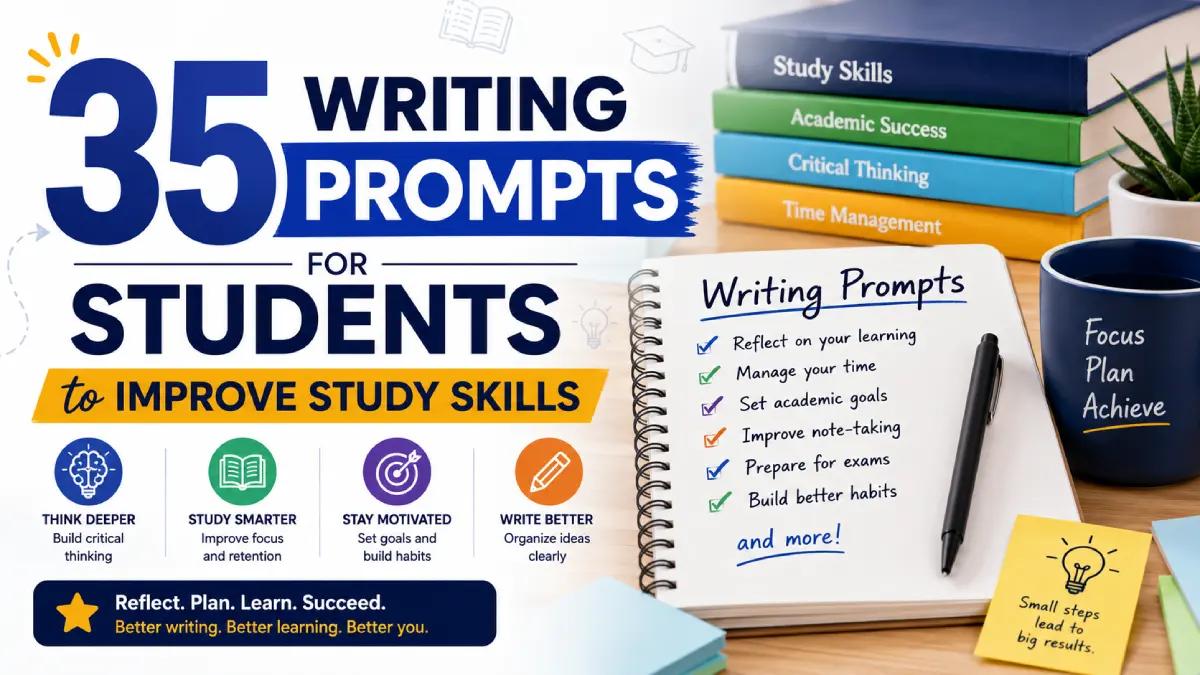
- 18 Writing Prompts for Students to Improve Study Skills Eighteen prompts that ask for something concrete about how you study, because explaining a method is what exposes where it is actually vague. Read article

Want more AIToolsay stories in your Google Search results?