







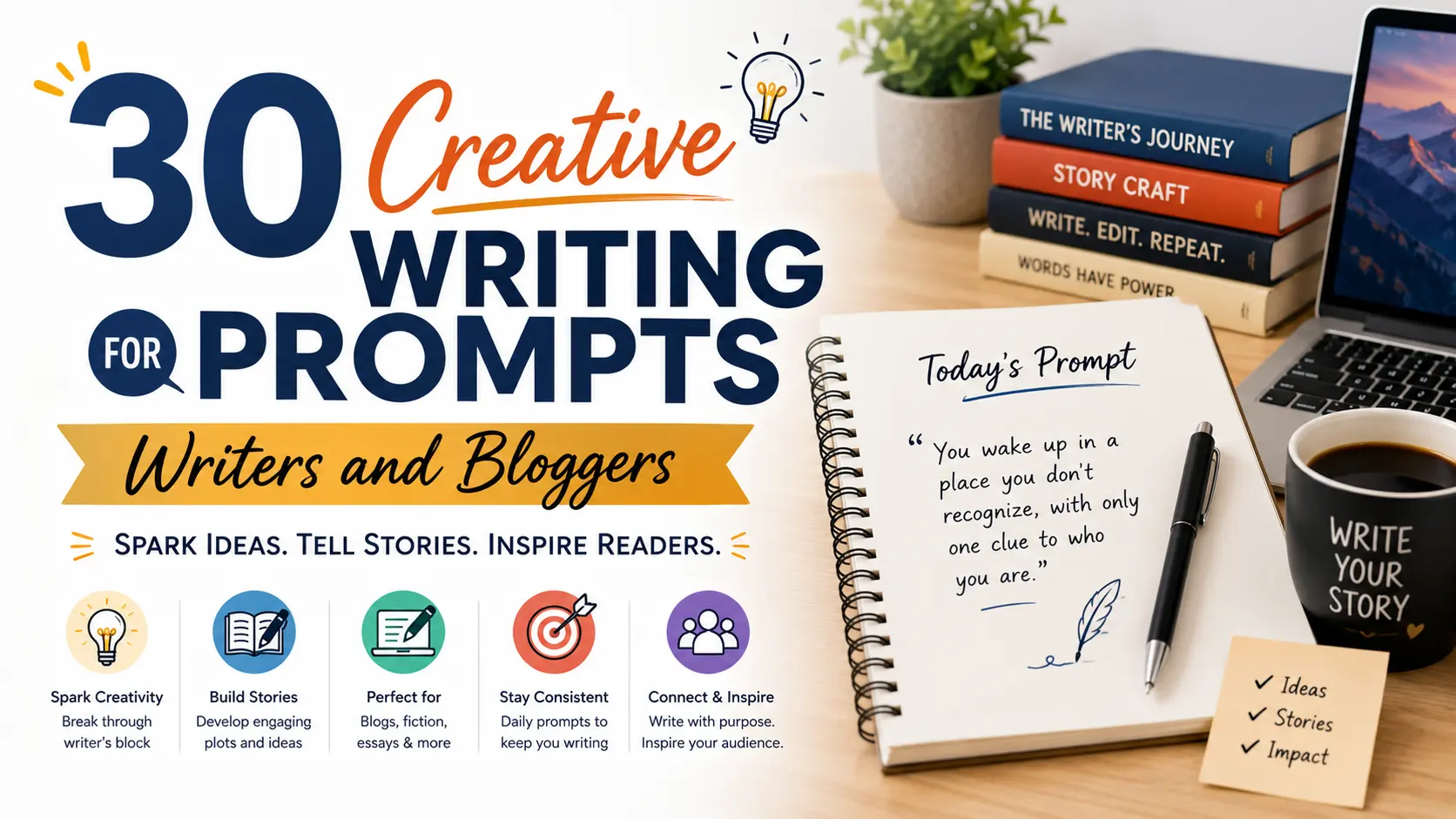
Are you staring at a blank page wondering what to write next? Do you need fresh blog writing inspiration, engaging storytelling ideas, or creative content concepts that can spark your imagination instantly?
If you’ve ever struggled to find new angles for articles, stories, personal essays, or blog posts, you’re not alone. Even experienced creators occasionally run out of ideas. That’s where carefully designed Writing Prompts for Writers and Bloggers can make a huge difference.
Whether you’re a professional blogger, content creator, freelance writer, novelist, student, marketer, or hobbyist writer, the right prompt can help unlock creativity, improve storytelling skills, and generate content faster.
In this guide, you’ll discover some of the best creative writing prompts, practical writing ideas for bloggers, and flexible prompts that can be customized for your audience, niche, and goals.
If you want access to free AI-powered writing assistance, visit aitoolsay.com and explore powerful AI tools designed to help writers create content more efficiently.
Why Writing Prompts Matter for Writers and Bloggers?
Writing prompts are structured ideas designed to stimulate creativity and eliminate writer’s block. Instead of spending hours searching for a topic, you can start writing immediately using a prompt as your foundation.
Benefits of Using Writing Prompts
- Generate fresh content ideas quickly
- Improve creative thinking skills
- Practice storytelling techniques
- Develop consistent writing habits
- Explore new writing styles and formats
- Create engaging blog content faster
- Build confidence as a writer
For bloggers, prompts can also uncover new perspectives on familiar topics, helping create content that feels unique and valuable.
How to Use These Writing Prompts
Each prompt below includes customizable sections inside brackets. Simply replace the bracketed sections with your own details and begin writing.

Example
Instead of:
[Industry]
You can enter:
- Technology
- Health
- Education
- Travel
- Finance
- Personal Development
This flexibility makes every prompt suitable for multiple niches and audiences.
Quick Reference Table
| Purpose | Best Prompt Types |
|---|---|
| Blog Articles | Experience, Trend, Opinion, Case Study |
| Storytelling | Character, Conflict, Journey, Mystery |
| Content Marketing | Problem-Solution, Transformation, Lessons |
| Personal Branding | Life Lessons, Success Stories, Challenges |
| Educational Content | Guides, Tutorials, Research-Based Topics |
| Creative Writing | Fiction, Character Development, World Building |
Writing Prompts for Writers and Bloggers
Prompt 1: The Unexpected Lesson
Write about a situation where [person, organization, community, or character] believed that [common belief or assumption] was completely true. Describe how a specific event involving [challenge, mistake, discovery, or turning point] forced them to rethink everything. Explain the emotions, decisions, and consequences that followed. Include details about how their perspective changed and what lesson they learned. Conclude by discussing how this experience can help readers who face similar situations in [industry, profession, lifestyle, or niche].
Prompt 2: A Day That Changed Everything
Create a story or article about a single day that dramatically altered the future of [person, company, community, or fictional character]. Begin with their ordinary routine and explain what happened when [unexpected event] occurred. Explore their immediate reaction, the obstacles they faced, and the decisions they made. Describe how that one day influenced future opportunities, relationships, goals, or success. Connect the experience to practical insights that readers can apply to their own [career, business, education, or personal growth] journey.
Prompt 3: The Hidden Problem Nobody Talks About
Identify a challenge within [industry, niche, profession, hobby, or community] that many people experience but rarely discuss openly. Explain why the issue exists, how it affects individuals, and what misconceptions surround it. Share examples, hypothetical situations, or stories involving [target audience] to make the topic relatable. Provide practical solutions, actionable steps, and lessons learned. Finish by encouraging readers to think differently about the problem and consider new approaches that can lead to better outcomes.
Prompt 4: Advice From Your Future Self
Imagine that your future self from [number] years ahead sends a detailed message to your present self. In this message, describe the successes achieved, mistakes avoided, and lessons learned while pursuing [goal, dream, project, or ambition]. Include specific advice regarding habits, mindset, relationships, productivity, and decision-making. Explain which actions made the biggest difference and which opportunities should never be ignored. Conclude by reflecting on how following this guidance today could create a more successful and fulfilling future.
Prompt 5: The Turning Point Story
Write about a person who struggled with [problem, limitation, fear, or obstacle] for a long time. Describe how this challenge affected their daily life, confidence, and goals. Then introduce a critical turning point involving [mentor, event, opportunity, discovery, or decision]. Explain how they changed their approach and what steps they took toward improvement. Highlight setbacks, achievements, and lessons learned throughout the journey. End by sharing insights that readers can apply when overcoming their own challenges in similar situations.
Prompt 6: The Most Valuable Skill
Choose a skill related to [industry, profession, hobby, or personal development area] and argue why it is more important than people realize. Discuss how mastering this skill affects success, relationships, productivity, creativity, or growth. Include examples of individuals who benefited from developing it and describe common mistakes people make when trying to learn it. Provide practical methods for improvement and explain how readers can begin building this skill today regardless of their experience level or background.
Prompt 7: A Letter to Beginners
Write an open letter addressed to someone who is just starting in [industry, career, business, creative field, or hobby]. Share the advice you wish someone had given you when you first began. Discuss common mistakes, unrealistic expectations, valuable habits, and important lessons. Include encouraging examples and practical recommendations that can help beginners avoid frustration and make faster progress. End with a motivational message reminding readers that growth comes from consistent effort and learning through experience.
Prompt 8: The Decision That Seemed Wrong
Tell the story of a person who made a decision that appeared risky, unpopular, or irrational at first. Explain the circumstances surrounding the choice and why others doubted it. Describe the challenges, criticism, and uncertainty they faced after taking action. Then reveal how the decision eventually led to unexpected success, growth, or valuable lessons. Discuss the importance of independent thinking, calculated risk-taking, and trusting one’s judgment when pursuing meaningful goals.
Prompt 9: The Trend Worth Watching
Analyze an emerging trend within [industry, niche, technology, market, or community] that could significantly impact the future. Explain how the trend started, why it is gaining attention, and what opportunities or challenges it creates. Include examples of people or organizations adapting successfully to the change. Discuss potential outcomes over the next few years and offer recommendations for readers who want to prepare. Finish by encouraging readers to stay informed and proactive in a rapidly evolving environment.
Prompt 10: The Challenge Experiment
Design a personal or professional challenge lasting [number] days focused on improving [skill, habit, mindset, business activity, or creative practice]. Describe the rules, objectives, daily activities, and expected outcomes. Explain the difficulties participants may encounter and how they can overcome them. Include methods for measuring progress and staying motivated throughout the challenge. Conclude with a reflection on how small consistent actions can create significant long-term improvements in performance and confidence.
Prompt 11: The Biggest Myth in [Industry]
Write an article that challenges a widely accepted belief within [industry, profession, niche, or community]. Begin by explaining why most people believe this myth and how it became popular. Present evidence, experiences, examples, or logical arguments that reveal a different perspective. Discuss how this misconception may prevent people from achieving better results. Include practical recommendations for readers who want to avoid falling into the same trap. End by encouraging critical thinking and continuous learning when evaluating commonly accepted advice.
Prompt 12: Behind the Scenes of Success
Tell the story behind a successful [person, business, creator, entrepreneur, project, or organization]. Instead of focusing only on achievements, explore the failures, sacrifices, difficult decisions, and obstacles encountered along the way. Explain how persistence, adaptability, and learning contributed to their eventual success. Include lessons readers can apply to their own goals and ambitions. Finish by showing that success is usually the result of consistent effort rather than overnight breakthroughs.
Prompt 13: What If Everything Changed Tomorrow?
Imagine that a major change suddenly transforms [industry, technology, profession, community, or society] overnight. Describe what happens during the first 24 hours, the first month, and the first year after the change. Explore how individuals, businesses, and communities adapt to the new reality. Discuss opportunities, risks, and unexpected consequences. Conclude by examining what readers can learn about flexibility, preparation, and resilience from this hypothetical scenario.
Prompt 14: The Problem-Solution Journey
Choose a common problem faced by [target audience] and explain how it affects their daily lives. Describe the frustration, limitations, and challenges associated with the issue. Then present a detailed step-by-step solution involving [strategy, process, framework, or tool]. Include realistic examples and explain how each step contributes to solving the problem. End by showing the transformation readers can expect if they consistently apply the recommended approach.
Prompt 15: Lessons From Failure
Write about a significant failure experienced by [person, company, entrepreneur, creator, or fictional character]. Describe the circumstances leading up to the failure, the mistakes that were made, and the consequences that followed. Explain how the individual or organization responded to the setback and what lessons were learned. Highlight how failure often creates opportunities for growth, innovation, and improvement. Finish with actionable insights readers can use when dealing with their own disappointments and challenges.
Prompt 16: The Resource Nobody Uses Enough
Identify a valuable resource related to [industry, profession, education, business, or personal development] that many people overlook. Explain why it remains underutilized and what benefits it offers. Share examples of individuals who gained significant advantages by using it effectively. Provide practical strategies for readers who want to take advantage of this resource in their own work or life. End by encouraging readers to explore opportunities that may be hidden in plain sight.
Prompt 17: A Conversation Worth Having
Create a fictional or real-world dialogue between [two people, groups, generations, experts, or opposing viewpoints] discussing an important topic related to [industry, society, business, education, or personal growth]. Allow both sides to present thoughtful arguments and concerns. Explore misunderstandings, agreements, and moments of insight throughout the conversation. Conclude with key takeaways that readers can apply when having similar discussions in their own personal or professional lives.
Prompt 18: The Skill That Changed Everything
Write about a person who developed [specific skill] and experienced dramatic improvements in their career, business, creativity, or personal life. Explain what motivated them to learn the skill and describe the challenges they faced during the learning process. Highlight key milestones, breakthroughs, and lessons learned. Include practical advice for readers who want to develop the same ability. End by demonstrating how one skill can create opportunities across multiple areas of life.
Prompt 19: Predicting the Future
Imagine what [industry, profession, technology, education, business, or society] might look like in [year]. Discuss emerging trends, potential innovations, changing consumer behaviors, and evolving challenges. Explain how individuals and organizations can prepare for these developments today. Include realistic possibilities rather than extreme predictions. Finish by encouraging readers to embrace continuous learning and adaptability in order to remain relevant and successful in the future.
Prompt 20: The Ultimate Beginner’s Guide
Write a beginner-friendly guide explaining [topic, skill, industry, platform, or process] from the ground up. Assume the reader has no prior knowledge. Define important concepts, explain foundational principles, and provide a simple roadmap for getting started. Include common mistakes beginners should avoid and practical steps they can take immediately. End with encouragement that helps readers feel confident about taking action and continuing their learning journey.
Prompt 21: The Challenge Nobody Expected
Write about a situation where [person, business, creator, team, or community] faced an unexpected challenge while pursuing [goal, project, mission, or ambition]. Explain how the challenge emerged, why it caught everyone by surprise, and what immediate impact it had. Describe the decisions made under pressure, the mistakes encountered, and the lessons learned throughout the process. Conclude by discussing how overcoming unexpected obstacles often develops resilience, creativity, and stronger problem-solving skills.
Prompt 22: The Untold Story
Choose a well-known event, trend, industry change, or success story related to [topic] and focus on a lesser-known aspect that people rarely discuss. Explore the experiences of [individual, group, employee, customer, community, or character] who witnessed the situation from a different perspective. Explain how their experience adds depth and understanding to the larger story. Finish by highlighting why hidden perspectives often reveal the most valuable lessons.
Prompt 23: One Habit That Changed My Life
Write about a single habit related to [productivity, health, creativity, learning, business, or personal growth] that created significant positive results. Explain how your life looked before adopting the habit, what motivated the change, and how you maintained consistency. Share measurable improvements, unexpected benefits, and practical advice for readers who want to develop the same habit. End by emphasizing the power of small daily actions over time.
Prompt 24: The Beginner vs Expert Perspective
Compare how a beginner and an expert approach [skill, profession, industry, hobby, technology, or activity]. Discuss differences in mindset, decision-making, priorities, problem-solving methods, and expectations. Include examples that demonstrate why experience changes perspective. Provide actionable insights that can help beginners accelerate their learning journey while avoiding common mistakes. Conclude with advice about balancing confidence, curiosity, and continuous improvement.
Prompt 25: The Most Important Question
Identify a powerful question related to [industry, business, career, personal development, education, or creativity] that more people should ask themselves regularly. Explain why this question matters, how it influences decisions, and what happens when people ignore it. Share examples of individuals or organizations that benefited from addressing the question honestly. Finish by encouraging readers to reflect on the question and apply its insights to their own goals.
Prompt 26: A World Without [Technology or Concept]
Imagine a world where [technology, platform, invention, process, service, or concept] never existed. Describe how individuals, businesses, education, communication, and daily life would be different. Explore both positive and negative consequences of this alternate reality. Discuss what this thought experiment teaches about the role of innovation and adaptation in society. End by encouraging readers to appreciate tools and opportunities that are often taken for granted.
Prompt 27: The Ultimate Resource List
Create a comprehensive guide featuring the most valuable resources for people interested in [industry, niche, profession, skill, hobby, or topic]. Explain why each resource is useful and how readers can benefit from it. Include books, websites, communities, tools, courses, strategies, or learning methods. Organize the recommendations in a practical way that helps readers take immediate action. Finish by explaining how consistent learning leads to long-term success.
Prompt 28: The Advice I Ignored
Write about a piece of advice related to [career, business, relationships, health, education, or personal development] that was initially ignored. Explain why the advice seemed unimportant or incorrect at the time. Describe the consequences of ignoring it and the events that eventually revealed its value. Share lessons learned and practical insights readers can apply in their own situations. End by discussing how wisdom often becomes clear through experience.
Prompt 29: Solving a Problem Creatively
Describe a situation where traditional solutions failed to solve [specific problem]. Explain how an individual, team, company, or community developed a creative alternative approach. Discuss the brainstorming process, experimentation, risks, and outcomes involved. Highlight the lessons learned about innovation, adaptability, and unconventional thinking. Conclude by encouraging readers to look beyond obvious solutions when facing complex challenges.
Prompt 30: The Legacy You Want to Leave
Imagine looking back on your life, career, business, or creative journey after many years. Reflect on the impact you hope to make on [family, customers, readers, community, industry, or society]. Discuss the values, achievements, contributions, and lessons you want people to remember. Explain the actions required today to build that legacy. End with an inspiring message about creating meaningful work that positively influences others.
How to Customize These Writing Prompts for Any Niche
One reason these Writing Prompts for Writers and Bloggers are so effective is their flexibility. Every prompt contains editable sections that allow you to tailor the topic to your audience and goals.
For Business Bloggers
Replace placeholders with:
- Industry trends
- Customer challenges
- Entrepreneurial experiences
- Marketing strategies
- Leadership lessons
For Personal Development Writers
Use topics such as:
- Mindset improvement
- Productivity habits
- Goal achievement
- Motivation
- Self-improvement
For Technology Bloggers
Focus on:
- Artificial intelligence
- Software development
- Future technologies
- Digital transformation
- Tech tutorials
For Education Writers
Customize prompts around:
- Learning methods
- Student success
- Teaching strategies
- Career preparation
- Educational technology
For Story Writers
Adapt prompts using:
- Fictional characters
- Fantasy worlds
- Historical settings
- Mysteries
- Adventure scenarios
Content Creation Workflow Using Writing Prompts
Professional writers and bloggers often follow a structured process when using prompts.
| Step | Action |
|---|---|
| 1 | Select a prompt relevant to your audience |
| 2 | Replace bracket placeholders with specific details |
| 3 | Create an outline from the prompt |
| 4 | Add personal insights and examples |
| 5 | Optimize for SEO if publishing online |
| 6 | Edit for clarity and readability |
| 7 | Publish and promote the content |
This workflow helps transform simple creative writing prompts into engaging articles, stories, newsletters, and marketing content.
How AI Can Help Writers Generate More Ideas
Modern AI tools can significantly reduce the time spent brainstorming content topics.
AI can help with:
- Topic generation
- Blog outlines
- Article drafts
- Headline creation
- Content research
- Story development
- SEO optimization
- Content repurposing
At AIToolsay, writers can access powerful AI models including Google Gemini, OpenAI ChatGPT, Claude AI, DeepSeek, Qwen, Grok AI, Meta AI, NVIDIA AI, OpenRouter AI, MiniMax, and MSB AI from a single free platform.
If you want to explore more AI-powered writing solutions, visit aitoolsay.com/ai-tools and discover tools designed for content creators, bloggers, students, marketers, and professionals.
Best Practices for Using Writing Prompts Effectively
To maximize results from these Writing Prompts for Writers and Bloggers, follow these proven practices:
Focus on the Reader
Always consider what your audience wants to learn, solve, or achieve.
Add Original Insights
The prompt is only the starting point. Your unique experiences and perspective make the content valuable.
Create a Consistent Writing Habit
Using prompts regularly builds creativity and writing confidence over time.
Experiment With Different Formats
Turn prompts into:
- Blog posts
- Case studies
- Newsletters
- LinkedIn posts
- Social media content
- Short stories
- Educational guides
Keep an Idea Library
Save completed prompts and future ideas in a dedicated document for easy access.
Frequently Asked Questions
Are writing prompts useful for professional bloggers?
Yes. Professional bloggers frequently use prompts to brainstorm article ideas, discover new content angles, and maintain a consistent publishing schedule.
Can writing prompts improve storytelling?
Absolutely. Prompts encourage writers to explore characters, conflicts, emotions, and narratives that strengthen storytelling abilities.
How many writing prompts should I use per week?
There is no fixed number. Many writers use one prompt daily, while bloggers often review multiple prompts during content planning sessions.
Can beginners use these prompts?
Yes. The editable placeholders make these prompts suitable for beginners as well as experienced writers.
Are these prompts suitable for SEO content creation?
Yes. Many of these prompts can be adapted into SEO-friendly blog posts targeting specific keywords and search intent.
How can AI assist with writing prompts?
AI can generate topic variations, expand ideas, create outlines, improve readability, and help writers develop content more efficiently.
Creativity does not always appear on demand. Even the most experienced creators occasionally need fresh inspiration. That’s why having a collection of high-quality Writing Prompts for Writers and Bloggers can become one of the most valuable assets in your content creation toolkit.
The 30 prompts in this guide are designed to be flexible, practical, and easy to customize. Whether you are creating blog posts, articles, stories, newsletters, educational content, or personal essays, these prompts can help transform blank-page frustration into productive writing sessions.
The key is simple: start writing before you feel completely ready. Choose a prompt, replace the placeholders with details relevant to your audience, and allow your ideas to develop naturally. Consistent practice, curiosity, and experimentation will always produce better results than waiting for inspiration to arrive.
Thank you for reading this guide from AIToolsay. We invite you to explore our growing collection of AI-powered tools, join our community, subscribe to newsletters, enable push notifications, and follow our social media channels for the latest updates on AI, content creation, SEO, blogging, productivity, and writing tools.
Start creating today and let your next great idea begin with a single prompt.
Try AIToolsay: aitoolsay.com
Explore AI Writing Tools: aitoolsay.com/category/ai-writing-tools